Provençal Bastides and Mas: a buyer’s guide to the Côte d’Azur
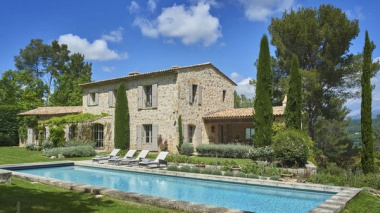
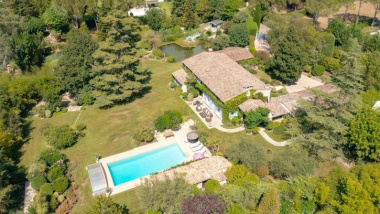
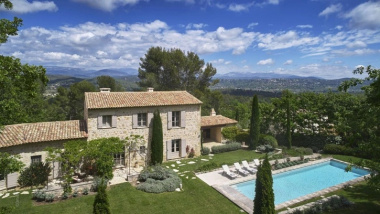
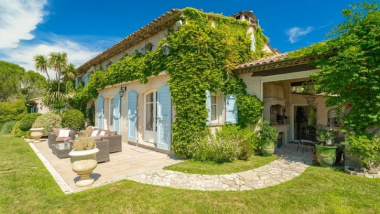
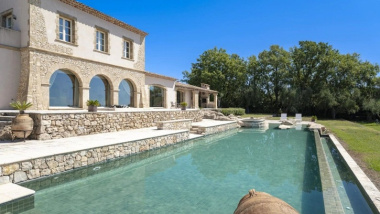
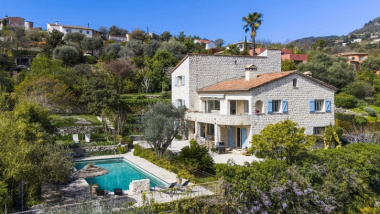
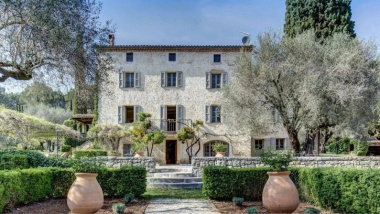
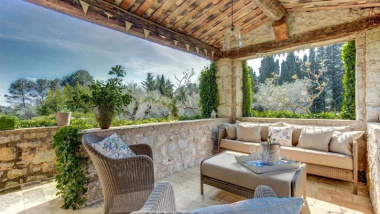
Beyond the Côte d’Azur coastline, renowned for its contemporary villas and Belle Époque residences, lies another equally sought-after architectural heritage: that of Provençal bastides and mas.
Rooted in the rural and aristocratic architecture of the seventeenth and eighteenth centuries, these stone residencesembody a different way of life in Provence, amid centuries-old olive trees, dry-stone terraces and hilltop villages.
For buyers seeking authenticity, purchasing a Provençal bastide on the Côte d’Azur requires an understanding of the region’s architectural vocabulary, the areas in which these properties are concentrated, and the regulations governing their renovation.
This guide outlines the key considerations before investing in a character property in the Var or Alpes-Maritimes.
Mas, Bastide and Cabanon: the vocabulary of provençal architecture
The mas and the bastide are two defining forms of Provençal architecture, but each was conceived for a distinctly different purpose.
The mas originated as a traditional farmhouse in southern France, designed as a working agricultural property accommodating its owners, farm workers and, at times, livestock. Generally low-built, with its living accommodation arranged on a single level, it is characterised by a shallow-pitched roof and deliberately small openings, designed to keep the interior cool in summer and minimise heat loss in winter. Its stone walls can exceed sixty centimetres in thickness. A smaller, more modest version is known as a mazet.
The bastide, by contrast, was conceived with comfort and prestige in mind. Built as a summer residence for the Provençal bourgeoisie or aristocracy, it draws on the classical architecture of the seventeenth century and favours symmetry: a façade arranged around an odd number of openings, a central entrance surmounted by a wrought-iron balcony, and several storeys beneath a hipped roof. Surrounded by gardens and, in some cases, an agricultural or wine-growing estate, the bastide was long intended to express its owner’s standing as much as to provide a place of residence.
Alongside these two forms is a third, more modest structure: the cabanon. Originally a simple agricultural or fisherman’s shelter, it is now prized for its simplicity and intimate proportions.
This vocabulary shapes the way properties are described and positioned on the market. Understanding these distinctions enables buyers to assess the architectural authenticity of a listing more accurately.
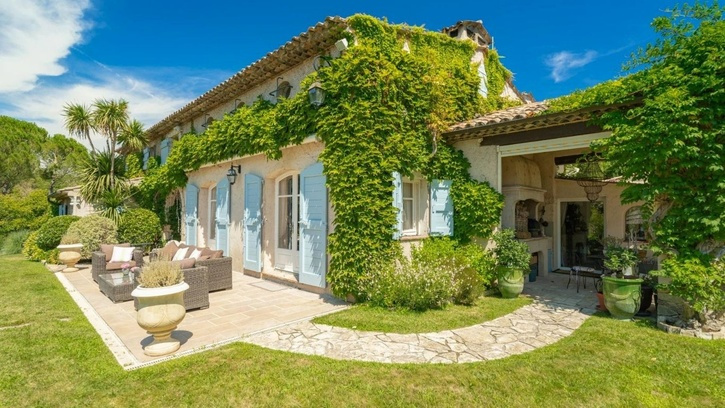
This architectural language is complemented by a wealth of details that contribute to the character and value of a period property: génoises, the layered rows of terracotta tiles beneath the eaves that define the roofline and cast shade across the façade; traditional curved tuiles canal; shutters painted in colours characteristic of each village; and restanques, the dry-stone terraces built into hillsides to retain cultivable soil.
On a bastide, these features are often original and may be protected accordingly. On a mas altered over successive decades, their condition can provide a valuable indication of the quality of previous renovations, as well as the work that may still be required.
Where to find these properties on the Côte d’Azur and in its hinterland ?
Bastides and mas are primarily found in the hinterland, generally around twenty minutes, or slightly more, from the beaches.
Savills has established a strong presence in the Pays de Fayence, with a dedicated local team and several completed sales. This rolling part of the Var extends as far as Seillans, whose cobbled lanes and vaulted passageways have earned it a place among the Plus Beaux Villages de France. Throughout the area, several villages share the same distinctive Provençal architectural heritage.
The Var is also home to a substantial part of the Côtes de Provence appellation, the largest in the region. It covers more than 20,000 hectares across 84 communes in the Var, Bouches-du-Rhône and Alpes-Maritimes, with rosé accounting for the majority of its production. Many eighteenth-century bastides form part of wine estates, offering scope for a long-term investment that extends well beyond the enjoyment of a second home.
Closer to the coast, the hills around Mougins, Valbonne and Grasse are also home to mas and bastides, often surrounded by olive groves and within easy reach of renowned golf courses such as Royal Mougins Golf Resort, as well as celebrated hotels including Château Saint-Martin & Spa in Vence and Le Mas Candille in Mougins.
Renovating a Bastide or Mas: what buyers need to consider
The renovation of a bastide or mas may be subject to regulations extending beyond standard planning requirements whenever the property lies within a protected area.
Such areas include the surroundings of historic monuments, generally within a radius of 500 metres, as well as conservation areas, designated heritage sites, classified or registered sites and certain zones protected for their architectural, urban or landscape value.
In terms of energy performance, only properties officially classified or registered as historic monuments are exempt from the diagnostic de performance énergétique (DPE), France’s statutory energy performance assessment. An old bastide, however architecturally significant, remains subject to the DPE requirement if it does not benefit from this formal protection, even when situated within a protected area.
Although thick stone walls provide genuine thermal mass, this is not always adequately reflected in the DPE methodology. Before relying on this rating alone when making a purchase decision, buyers would therefore be well advised to consult an energy assessor experienced in period buildings.
As most of these properties were built well before the middle of the twentieth century, they are also subject to lead and asbestos surveys. A lead survey is compulsory for any residential property built before 1949, while an asbestos survey is required for buildings constructed before July 1997.
These reports form part of the dossier de diagnostic technique (DDT), the statutory set of surveys supplied as part of the sale. They allow buyers to anticipate any work that may be required to bring the property into compliance, particularly where a bastide or mas retains its original paint finishes or wall coverings.
Bastides and Mas: a family legacy as much as an investment
Beyond their aesthetic appeal, the purchase of a bastide or mas on the Côte d’Azur often forms part of a long-term family and investment strategy.
A property accompanied by a wine estate in the Var, for example, combines the enjoyment of a second home with the operation of an established agricultural asset. A restored bastide in a village such as Tourrettes, meanwhile, can become an enduring family home, passed from one generation to the next—much like the exceptional Alpine residences for which Savills also advises clients across the French Alps.
Some owners choose to let their bastide or mas for part of the year, particularly during the summer season. This requires buyers to consider from the outset the amenities expected by an international clientele, including a swimming pool, converted outbuildings and convenient access to the village.
The relative proximity of the coast makes it possible to enjoy the infrastructure and amenities of Cannes, Nice or Grasse without compromising the tranquillity of the hinterland.
It is this combination of architectural authenticity, a preserved rural setting and access to the amenities of the Côte d’Azur that explains the enduring appeal of these properties to international buyers, from families seeking a distinctive home to buyers taking a long-term investment view.
From the Pays de Fayence to the hills of Mougins and Valbonne, our Savills French Riviera advisers guide clients through every stage of identifying and acquiring a character property in the hinterland, with close attention to architectural integrity, long-term value and tax considerations.
Property in Èze: buying between sea and sky